

בלוג
Caregiving From Afar: What supporting my mom through metastatic breast cancer has taught me
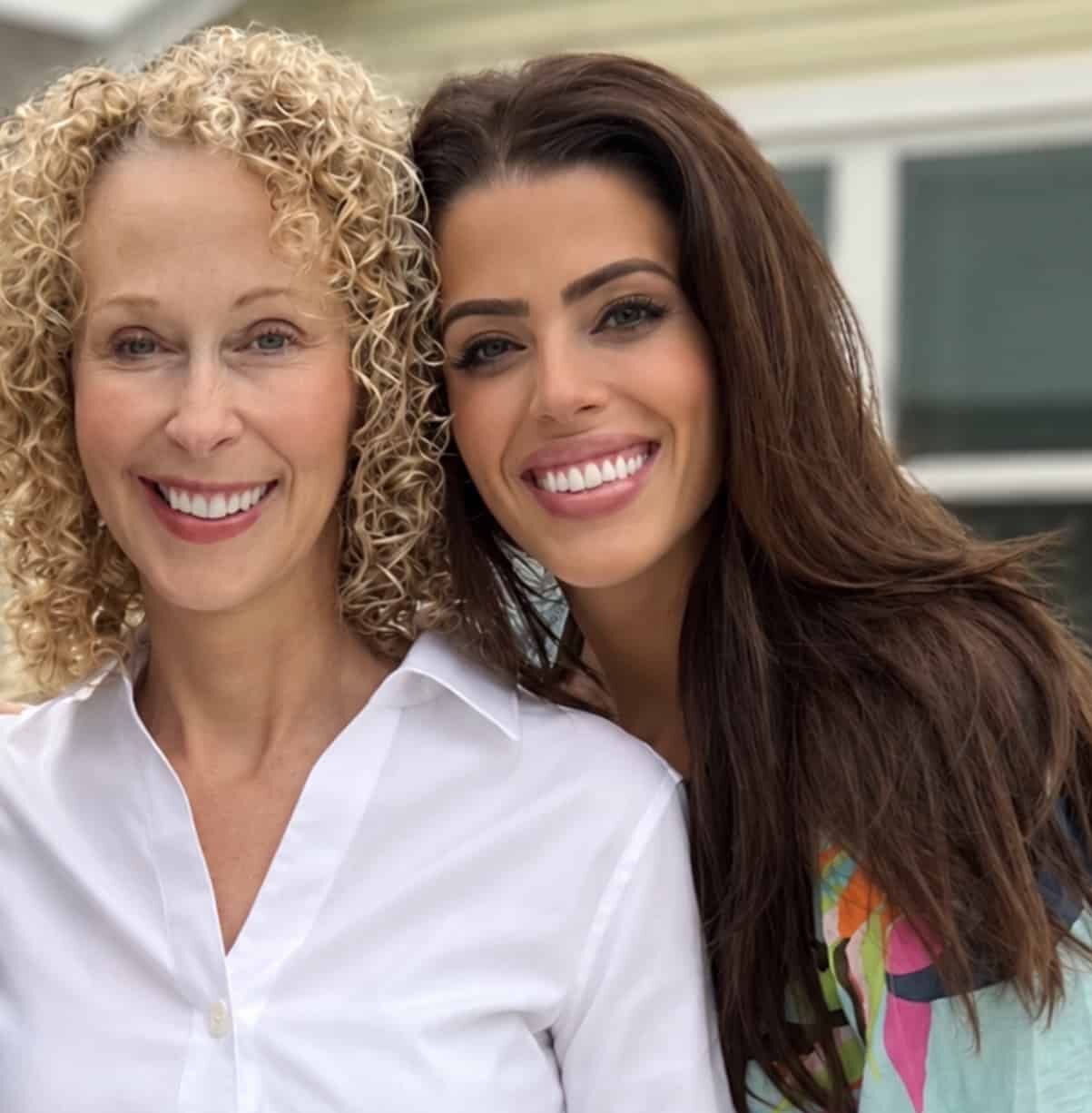
Last September, I celebrated ten years of my business, Bisous Beauty Bar. Instead of a traditional anniversary party, I wanted to do something meaningful and tie it into an organization that is close to not only my heart, but my clients’ hearts as well: Sharsheret. The room was filled with women who had supported me for years as clients and who, somewhere along the way, had become friends and family. Many of them had also been touched by breast cancer and had personally turned to Sharsheret for support.
Through my clients and friends, I had learned so much about Sharsheret and the work it does.
There were so many meaningful moments that day, but the most important was that my mom flew in from Michigan to be there. That part meant everything to me.
Standing in that room, I was able to say that my mom was there with us, cancer-free, nine years after her original stage I breast cancer diagnosis.
At least, that is what we believed.
Just a few months later, we learned that her breast cancer had returned—or maybe it had never really left. This time, it was stage IV.
My mom was first diagnosed with stage I breast cancer nine years earlier. I was young, newly married, and pregnant for the first time. That pregnancy ultimately ended in miscarriage, and although I can’t know what caused it, I remember that entire period as one enormous wave of fear and stress.
When my mom told me she had breast cancer, it felt like my world stopped.
She underwent a mastectomy, and I flew home to Michigan for her surgery. Eventually, treatment ended and life moved forward. Over time, cancer began to feel like something our family had survived.
That belief made the second diagnosis almost impossible to process.
There had been no obvious indication that her breast cancer had returned. Her mammograms and ultrasounds had not shown another breast tumor. Her bloodwork had been reassuring. She had been dealing with what she thought were lingering COVID-related symptoms when additional imaging was done for her lungs, and something suspicious appeared on her thoracic spine.
What followed eventually led to the diagnosis none of us expected: metastatic breast cancer.
I will never forget the phone call from my mom.
She lives in Michigan and I live in New Jersey, so I was hearing this news from hundreds of miles away. I remember trying to sound strong for her on the phone. I wanted to be calm. I wanted to make her feel like we were going to handle whatever came next.
Then we hung up.
I was driving at the time, and I had to pull over. I completely fell apart. The first thing I did was reach out to Sharsheret for support.
For years, Sharsheret had been an organization I supported because I believed in its mission. I had watched clients and friends receive support from the organization. I had raised money for Sharsheret and built friendships with people connected to its work.
But suddenly, I was not reaching out as a business owner, fundraiser, or friend.
I was reaching out as a daughter who had just heard the words “stage IV.”
And I was terrified.
When most people hear stage IV, their mind immediately goes to the worst possible place. Mine certainly did. I was 32 years old, and I could not comprehend having to think about losing my mother.
Sharsheret support did not dismiss my fear. Instead, it helped me begin to work through it. I was reminded that metastatic breast cancer is not one story with one outcome. Having someone help me step back from the future I had already begun grieving and return to the present moment made an enormous difference.
Shortly afterward, I received additional support from Sharsheret’s support team.
What happened next affected me more deeply than I can probably put into words.
During those first weeks and months, Sharsheret checked in on me with a consistency I did not expect.
There were nearly daily messages asking how my mom was doing, how I was doing, and how all of us were handling everything emotionally.
Sharsheret also became a resource for my mom. The team connected with her, sent information and multiple care packages, offered practical and emotional support, and helped us navigate the strange new world that opens up after a metastatic diagnosis.
That support truly changed the way I moved through this year.
I am not my mom’s traditional caregiver. I do not live with her. I am not the person taking her to every appointment, managing her medications, or handling the physical tasks that many caregivers take on every day.
I live in New Jersey. She lives in Michigan.
For a while, I think part of me felt almost guilty about that distance.
What I have learned is that caregiving and support do not always look the way we expect them to.
Sometimes caregiving is physical.
Sometimes it is sitting in an infusion chair.
Sometimes it is driving someone to an appointment.
And sometimes it is answering the phone from another state and helping the person you love find their footing again.
Sometimes it is researching treatments late at night so you can better understand what they are facing.
Sometimes it is listening without trying to fix anything.
Sometimes it is keeping your own panic out of your voice long enough to remind your mom that today is still today.
And sometimes, before you can be that support for someone else, you have to learn how to support yourself.
This year forced me to confront how easily I could live inside anticipatory grief.
When my mom was diagnosed with stage I cancer years ago, I felt like my world was ending.
When I heard stage IV, that feeling came rushing back even more intensely.
But something has changed in me since then.
I realized that I could spend every day grieving something that had not happened yet, or I could choose to actually live the day in front of me.
That does not mean I am endlessly positive.
We still experience scanxiety. I still get scared. There are appointments, blood tests, and scans that make my stomach drop. There are moments when my mind runs ten steps ahead and imagines every possible outcome.
But I have more tools now.
The support I received from Sharsheret helped push me toward strengthening my own mental and emotional health. It eventually became one of the reasons I pursued Reiki certification and grew in my yoga practice. I wanted ways to ground myself, regulate my own fear, and hopefully share some of that steadiness with my mom.
I used to think supporting someone with cancer meant knowing exactly what to say or somehow finding the strength to never fall apart.
I do not believe that anymore.
Sometimes strength is reaching out when you are the one falling apart.
Sometimes it is letting people help you.
Sometimes it is learning enough about your own fear that you stop allowing it to steal every good day that still exists.
That is one of the greatest gifts Sharsheret has given me.
For years, I supported this organization from the outside because I had seen what it meant to women I cared about.
Then suddenly, my family needed it too.
The same organization we honored at my salon’s ten-year anniversary, while my mom stood in the room believing cancer was behind her, became one of the places I leaned on when cancer came crashing back into our lives.
There is something incredibly full-circle about that.
No one wants to hear the words metastatic breast cancer.
No one wants to become fluent in scans, tumor markers, treatment cycles, side effects, and the strange vocabulary that cancer brings into a family.
But I have learned that caregiving is not defined only by proximity.
You can be hundreds of miles away and still be a source of comfort, strength, perspective, and love.
You can be someone’s daughter and still be part of their care.
And sometimes the best thing you can do for the person you love is learn how to live beside uncertainty without letting it consume both of you.
Every day really is a gift.
Not because every day is easy.
Not because fear disappears.
But because today is the only part of this journey we actually get to live.
And I am learning to live it with my mom, one day at a time, with immense gratitude for the support we have received from Sharsheret.
תמיכה אישית
צרו קשר עם הצוות הקליני שלנו, המורכב מאנשי מקצוע מיומנים ובעלי מקצוע בתחום בריאות הנפש ויועצים גנטיים, כדי לשוחח באופן פרטי בכל שלב במסע מחלת הסרטן.

תמיכה עמית לעמית
יצירת קשר עם מישהו שעבר בדרך דומה יכולה לספק ביטחון רגשי, עצות מעשיות והבנה אמיתית.
הישארו מחוברים
האימיילים שלנו כוללים חדשות, תמיכה, וובינרים קרובים ואירועים בנוגע לשרשרת.